Water Bore Drilling & Installation in Perth
A new domestic bore in Perth is a hole, a liner and a pump, and the address decides how each is done. Sand is drilled and gravel-packed, Hills rock is hammered, and the WA Government's Perth groundwater map estimates the depth to the watertable beneath your property.
Thanks — we have your enquiry. Someone will be in touch shortly. Prefer to talk now? Call (08) 6311 4037.
What water bore drilling in Perth actually involves
A bore is a hole, a liner and a pump, and the three are quoted together because none of them is useful alone. On Perth's coastal plain the hole is drilled through sand, cased with a slotted screen so water enters without the sand following it, and gravel-packed around the screen to filter what does come through. A submersible pump goes down the casing and the water comes up to the surface where the retic connects. The WA Government says garden bore construction should meet the Minimum Construction Requirements for Water Bores in Australia, and recommends an experienced accredited driller who will hand over a bore log at the end.
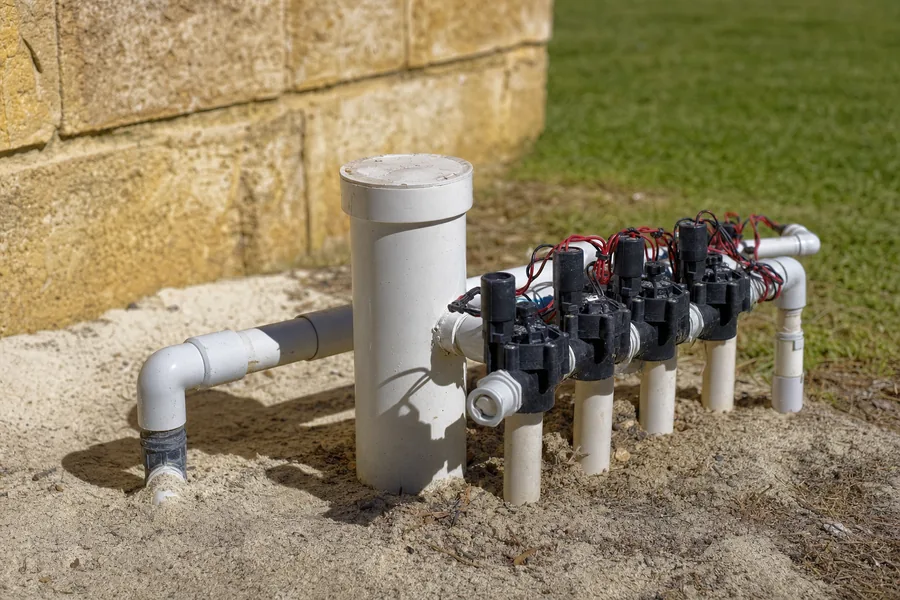
What a new bore actually involves
In the Kalamunda and Roleystone hills almost none of that is the same. The ground is lateritic clay and gravel over granite, the rig is a pneumatic hammer rather than a sediment drill, and water is found in fractures in the rock rather than in a saturated sand layer — so yield is less predictable and two neighbouring blocks can return different results. That is not a reason to avoid a Hills bore; it is a reason to expect the quote to talk about depth ranges rather than a single number, and to be suspicious of one that does not.
Depth is the figure people most want before they call, and Perth genuinely does not have one. The WA Government's Perth groundwater map publishes, by address, the estimated depth to the watertable and the depth of the Superficial aquifer, and describes the base of that aquifer as the maximum allowable bore depth for non-commercial use without the Department's approval. Its garden bore guidance also names the areas where a bore is generally unsuitable: within 200 m of the ocean or the Swan River Estuary, and in and around the Perth foothills. Check the map before a quote rather than after it.
Water bore drilling costs and rules check
Water Bore Drilling & Installation in Perth — common questions
What is a rebore, and what is a bore camera inspection?
A rebore is drilling again, deeper or in a new position, when an existing bore no longer gives the yield it did. A camera inspection is the diagnostic step that should come first: a camera is lowered down the casing to see what is actually wrong before anyone prices a new hole. Collapsed or blocked screen, casing damage and iron fouling all look identical from the surface, because the pump simply stops delivering, and they have very different fixes. The WA Government advises regular inspection of headworks, casing and pump for scaling, corrosion or damage, and says a bore that is no longer wanted should be professionally capped. Paying for a rebore without looking first is how a repairable bore becomes a replaced one.
Can I drink bore water?
No — treat a garden bore as irrigation water only. The WA Government states that using garden bores for drinking water is not recommended where scheme water is available, and warns that although shallow groundwater across the Perth and Peel regions is generally good for irrigation-type purposes, water from your bore may contain contaminants including heavy metals and bacteria that could make you very ill. Its position is that bore water is not safe to consume without appropriate testing, treatment as required, and ongoing monitoring. If you have no scheme water, the WA Government points you to a NATA-accredited laboratory for a standard drinking water test rather than to a tradesperson.
Will a bore stain my paving and walls?
Often, yes. The WA Government says iron staining from garden bores is common in Perth: natural dissolved iron in the groundwater reacts with air when it reaches the surface and leaves a red rust coat on paths, walls and fences. Its advice is that the stains can be difficult to remove but can be prevented by installing the right sprinklers to avoid overspray and run-off, such as drip-line sprinklers in garden beds. The Perth groundwater map has an iron staining risk tab for your address, so the risk can be read before the bore is drilled rather than discovered on the paving afterwards.
Ready to get your water bore drilling job quoted?
Free quote, one local provider, no obligation.
Last reviewed · Updated · First published